
“The Consumption of Identity” We feed others with our identity, until only waste remains.
Love, when it becomes self-annihilation, gives rise to a visceral ecology as magnificent as it is monstrous. In The Consumption of Identity, Luca Lombardi delivers a searing and necessary indictment rooted in a real tragedy: the story of a friend, a makeup artist of extraordinary talent, who sacrificed her career and her joy to devote herself entirely to her autistic son, only to find herself subjected to a violent husband and cut off from the world. Nothing remained of the creative woman she had been. Lombardi does not offer her pity; he renders her as sustenance, pure and simple, using a small white goat to embody an insatiable love that consumes the person who gives it.
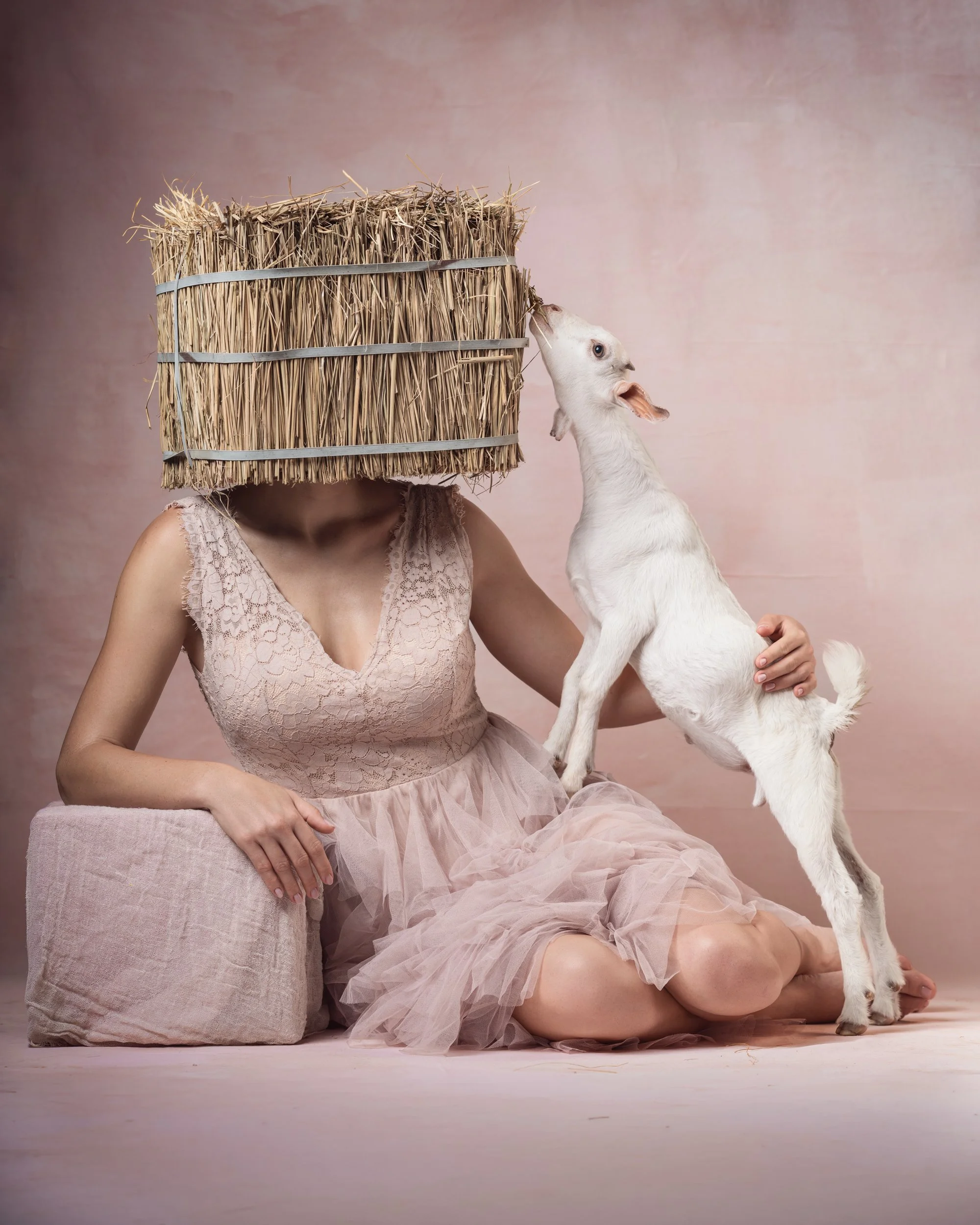
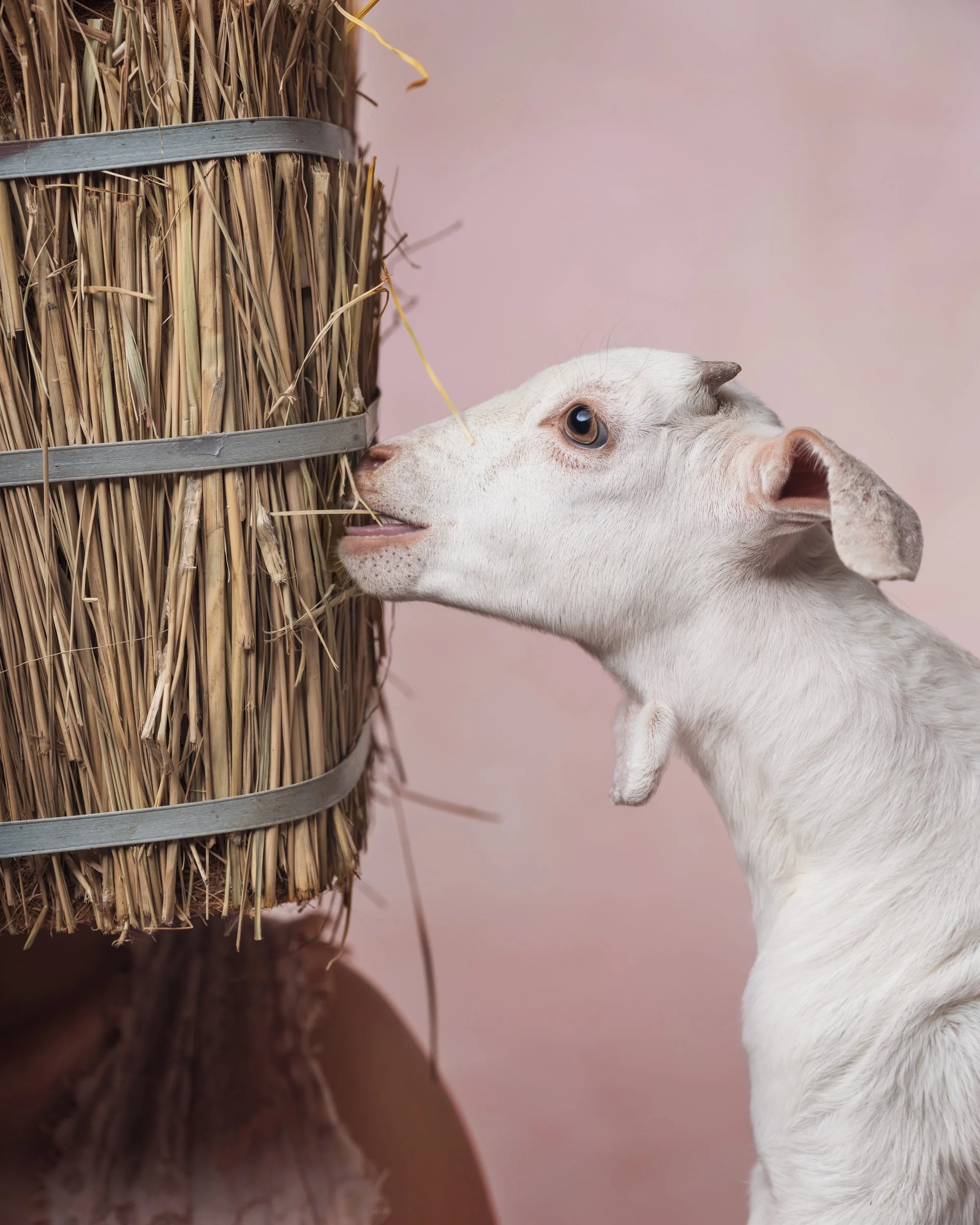
The visual journey begins with the genesis of sacrifice. Seated in ethereal pink tulle, the female figure has her head encased in a block of hay secured with straps. Her identity has been erased, reduced to food for the goat that begins to consume her. In the second photograph, the tension becomes more intimate, more merciless: a tight close-up captures the act of chewing. Here, the parasitic nature of giving oneself away entirely emerges with clinical clarity in the animal’s teeth as they gnaw through the hay.
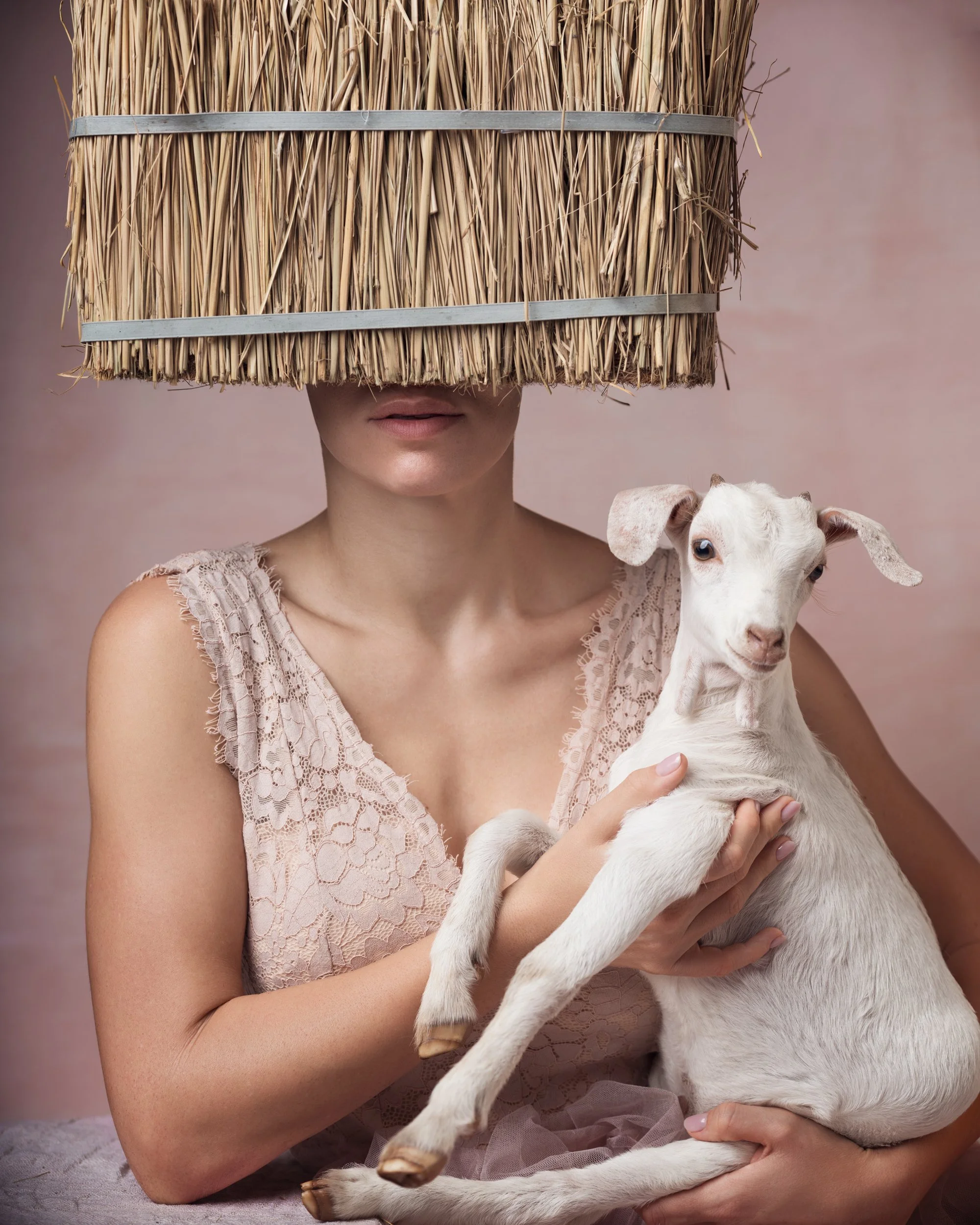
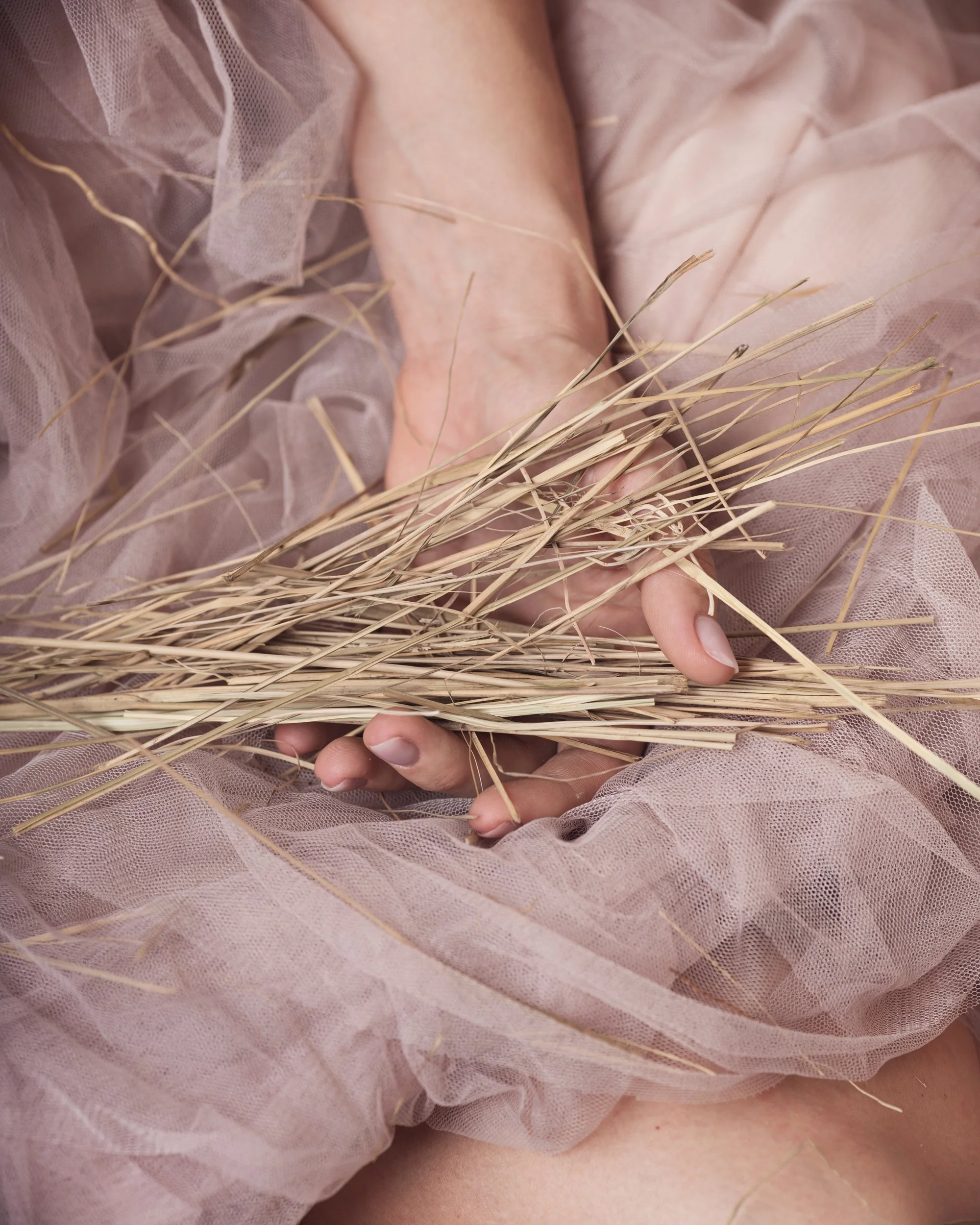
Devotion reaches its conceptual apex in the third image, a contemporary Pietà in which the woman cradles the goat against her chest, accepting her submission to a role that has drained her of every colour. In the fourth photograph, the frame closes in on her hands and the remaining strands of hay scattered across her dress, evoking the profound fragility of someone who was once a whole individual and is now little more than a husk.
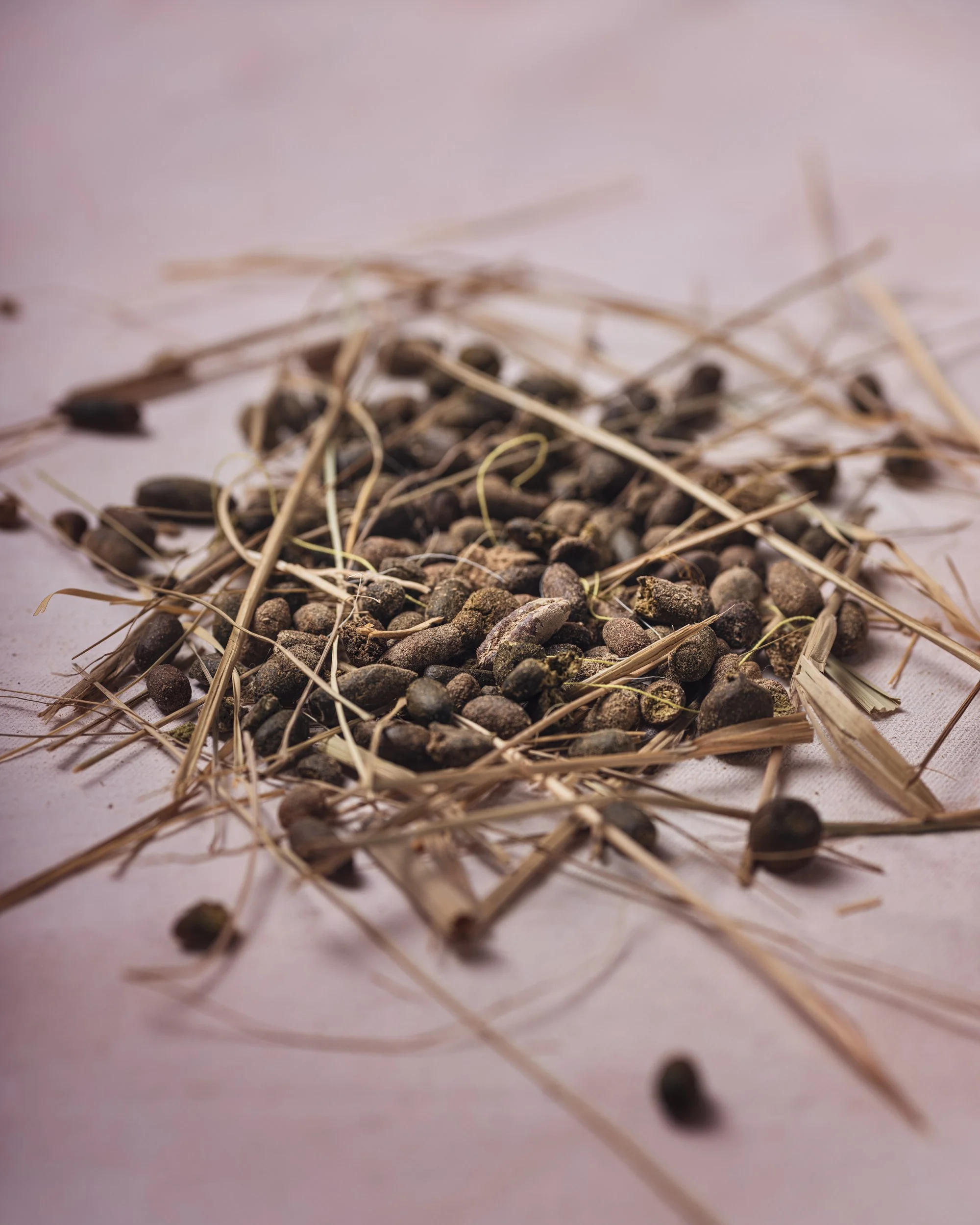
The nihilistic revelation arrives in the final image. There is no more tulle, no more hay—only a heap of dung and straw against a pastel backdrop. This is Lombardi’s final provocation, a blow to the gut, brutal and ice-cold: when we erase ourselves for love, all that remains of who we once were is a few pellets of shit.
Text by Alessio Paolo Musella.